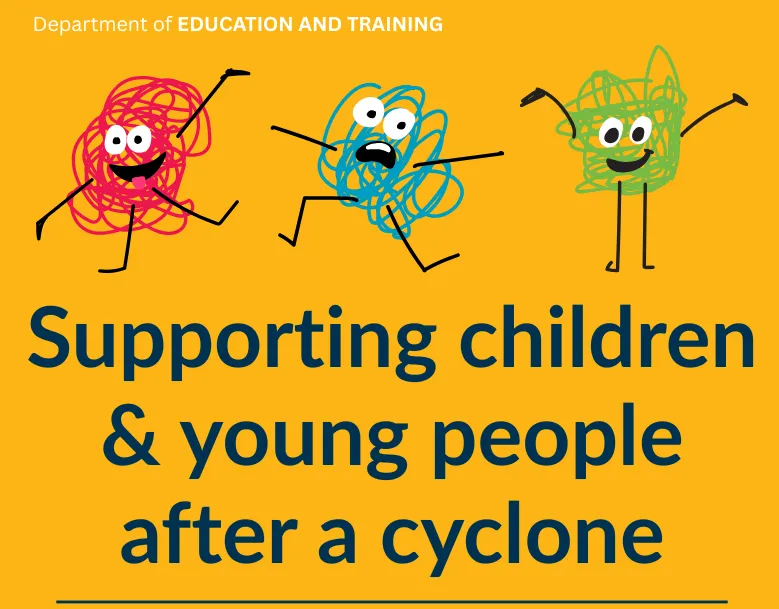
Supporting children and young people after a cyclone
Cyclones can be scary and disrupt children and young people’s sense of safety. They may feel worried, or sad and this is normal especially if homes, belongings, or routines are affected.
With care and reassurance, most children and young people will feel better over time.
The Department of Education and Training is working with schools to ensure that they have advice and resources on how relationships and routines within the school can provide a sense of safety for children and young people after a traumatic event in the community.
More information is available about the role of schools in supporting students after a traumatic event on the Beyond Blue website.
How might my child or young person react?
Your child or young person may experience the following common short-term reactions:
- Wanting to stay close to you.
- Trouble sleeping or bad dreams.
- Getting angry or have tantrums.
- Being very quiet.
- Finding it hard to concentrate.
- Say they feel sick (headaches, sore tummy).
How can I help them to feel safe?
- Keep them safe and comfortable, provide food, water, shelter, and consistent and continual care.
- Offer them reassurance, “You’re safe, and we’re together”
- Keep your routines, go back to school and daily activities when safe.
- Talk and listen, let them share feelings. Use calm words.
- Limit media exposure, protect them from too many pictures and news about the cyclone.
- Encourage them to play and move around, this helps process experiences and reduce anxiety.
- Stay calm and show them simple ways to cope, like taking deep breaths or talking things through.
If your home was unsafe and you stayed or are still staying somewhere else:
- Explain what’s happening in simple words.
- Ensure that familiar items such as toys, blankets, photos are with you.
- Maintain the same routines (meals, bedtime)
- Make sure your children know if you need to leave and when you will be back.
How do I support my teenager?
Teens may hide feelings, withdraw, or become irritable you can support them by:
- Keep talking with them and listen without judgment.
- Encourage sleep, routine, social contact, and healthy stress outlets like exercise, talking to friends
- Watch for worrying behaviours or strong avoidance
When should I seek extra help for my child?
Get help for your child if they are:
- Worry or sadness lasts more than 2–4 weeks.
- Behaviour changes don’t go away.
- Sleep issues or anxiety does not go away.
- Avoidance starts to impact daily life.
- Wellbeing or safety is making you worry.
What about my own wellbeing?
Make time to rest, connect with others, and take care of yourself. When adults are okay, children and young people cope better.
Need urgent help?
If someone is in danger or needs help now, call 000 or go to your nearest hospital or medical clinic.
Extra support services
Here are trusted organisations you can contact for more help.
| Service | Phone | Website |
|---|---|---|
| Headspace | 08 8931 5999 | headspace.org.au |
| NT Mental Health Line | 1800 682 288 | |
| Beyond Blue | 1300 224 636 | beyondblue.org.au |
| Kids Helpline | 1800 551 800 | kidshelpline.com.au |
| Parent Helpline | 1300 301 300 | parenthelpline.com.au |
| 1800 RESPECT (domestic and family violence) | 1800 737 732 | 1800respect.org.au |
| 13YARN (Aboriginal and Torres Strait Islander) | 13 92 76 13 | yarn.org.au |