Nhulunbuy High head to Melbourne for science
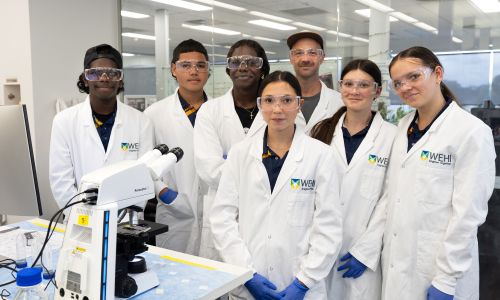
A group of Year 9 and 10 Nhulunbuy High School students, accompanied by their science teacher Ms O’Brien, took a trip to Melbourne last week to take part in the Deadly Science pathways Program.
The program run by The Walter and Elizabeth Hall Institute of Medical Research (WEHI) is based at the University of Melbourne, providing funding for Aboriginal and Torres Strait Island students to attend the Institute. During the 3-day program students engaged in activities designed to inform them of opportunities in science and STEM related education and employment pathways.
Science teacher Ms O’Brien worked in biomedical research prior to becoming a teacher and remains passionate about the sector. She jumped at the opportunity to apply for the Deadly Science Pathways Program (DSPP).
Being a remote NT school, there are not often opportunities to give students exposure to varied career options, particularly those in STEM. The WEHI DSPP funded travel and accommodation which enabled students to see first-hand the science and technology associated with medical research.
“We feel incredibly lucky to have the opportunity. The students left talking about wanting to get into university and pursue science careers,” Ms O’Brien said.
A highlight of the program was a presentation by Professor Misty Jenkins, the first Indigenous Australian to attend Cambridge University. Prof. Jenkins is currently researching ways to program immune cells to treat brain cancer. She, along with a number of other first nations STEM professionals shared their message around the importance of education and encouraged the students to see education as a pathway to meaningful employment, and understand the value of careers in science. “It’s so important to have mob working in science, because the knowledge can then be shared with community,” said one researcher.
Ms O’Brien said, “living in remote East Arnhem land, I didn’t think I would have the opportunity to take my students to the labs and lecture theatres of the University of Melbourne. Seeing students experience labs like the ones I used to work in, and seeing their imaginations and aspirations piqued was a truly special moment for me!”
A big thanks to WEHI and University of Melbourne.